- Bluetooth LE connection
- Works with iPhone, Android
- BMW / BimmerCode ready
The version number printed on a cheap adapter is a marketing label, not a promise about the chip inside. Here is how the labels line up with the hardware, and which boards older cars need.
Last updated September 2026Pick a clone labelled v1.5 only if it names a PIC18F25K80 and you drive an older car or use FORScan. Pick a branded adapter (Veepeak, Vgate, OBDLink) if you want the version question to disappear. Skip anonymous 'v2.1' dongles: that label has become the badge of the cheapest boards.
It sounds backwards: the adapter with the older number often works better. Neither number comes from the company that designed the chip. Both are labels clone makers chose, and they describe very different boards.
The v1.5 clones grew popular years ago. Their firmware was copied from early genuine ELM327 releases, and it answered most of the commands apps expect. Ford owners found that switched v1.5 cables ran FORScan well, and the label earned a reputation it still trades on.
The 'v2.1' label arrived later on cheaper boards. Many of them report v2.1 when an app asks, yet quietly ignore commands a real v2.1 chip would accept. Some leave out the circuitry for the older J1850 protocols altogether, so an older Ford or GM never answers.
So when two cheap dongles sit side by side, the v1.5 one with a named chip is usually the safer bet.
| Label you see | Who wrote the firmware | What to expect |
|---|---|---|
| v1.0 to v1.4b | ELM Electronics (genuine line) | Real chips of this age are rare now; the label is mostly copied |
| v1.5 | Clone makers only; ELM never shipped it | Often a decent copy of early firmware, best on a PIC18F25K80 |
| v2.0 to v2.3 | ELM Electronics (genuine line) | Genuine v2.x chips cost more than a whole cheap dongle |
| v2.1 on a budget dongle | Clone makers | Frequently a stripped board that skips commands and older protocols |
| No version, branded | Adapter maker (Vgate, Veepeak, OBDLink) | Own firmware that speaks ELM327 commands; updates from the maker |
Version history from ELM Electronics' published ELM327 releases. Clone behaviour comes from widely reported owner and developer testing and varies from board to board.
ELM327 started as a single chip from ELM Electronics, a small Canadian company. It was a programmed Microchip PIC that translated the car's OBD2 protocols into plain text commands over a serial link. That idea is why a phone app can talk to almost any car through a small plug.
Genuine ELM327 versions moved through a v1.x series in small steps, with lettered revisions such as v1.4b, then jumped to a v2.x series that ended at v2.3. Each release added commands and fixed protocol quirks. There was no v1.5 anywhere in that line.
Early in the chip's life its firmware was read out and copied. From then on, cheap adapters carried cloned code and a version string picked for marketing. In practice that means:
That command set reads a lot from a car and has firm limits, set out in what an ELM327 can read. You can also talk to the chip by hand with ELM327 AT commands from any terminal app.
You can learn a lot before the adapter ever reaches your car. The better clones use a Microchip PIC18F25K80, a 28-pin chip with its part number printed on top. The cheapest boards hide their processor under a black epoxy blob or use an unmarked chip.
The words 'original chip' deserve care. A PIC18F25K80 can be a genuine Microchip part while the code inside it is still a copy. That pairing is the best a cheap adapter gets, and it is what the v1.4 and v1.5 boards naming the chip offer.
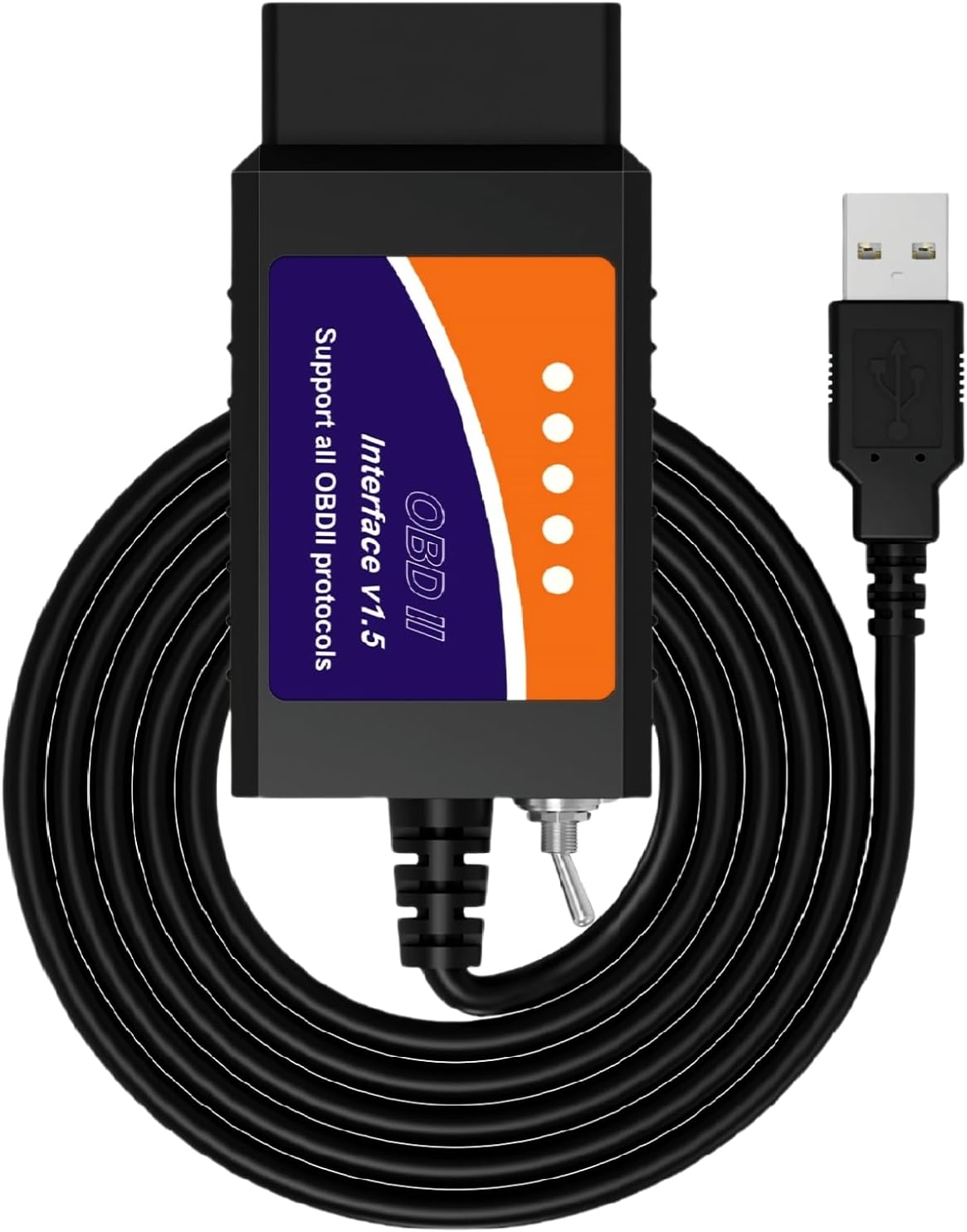
USB cables add a second chip to check: the USB bridge, usually an FTDI FT232RL or a WCH CH340. A cable that names both chips is telling you more than one that names neither.
Vgate ships firmware updates for the iCar Pro through its own updater app and a Windows tool, so the chip keeps improving instead of staying frozen at whatever a clone factory copied. It connects over BLE to iPhone and Android.
Check it outCars sold in the US had to use CAN for OBD2 from the 2008 model year. Before that, each maker picked from older protocols, and this is where cheap boards come unstuck. A clone that skips a protocol simply reports that it cannot connect.
| Protocol | Typical cars | Risk with a cheap 'v2.1' |
|---|---|---|
| SAE J1850 PWM | Older Fords, some Mazdas | High: circuitry often missing |
| SAE J1850 VPW | Older GM | High: circuitry often missing |
| ISO 9141-2 | Older Chrysler, European and Asian cars | Moderate |
| ISO 14230-4 (KWP2000) | Many 2000s European and Asian cars | Moderate |
| ISO 15765-4 (CAN) | Most cars from the late 2000s on | Low |
If your car is newer and runs CAN, almost any working clone will read codes. If it is a 2003 F-150 or an older Chevy pickup, pay attention to the board.
Veepeak OBDCheck BLE |
OBDLink MX+ |
Vgate iCar Pro BLE 4.0 |
OBDMonster ELM327 USB |
Generic ELM327 USB FORScan cable |
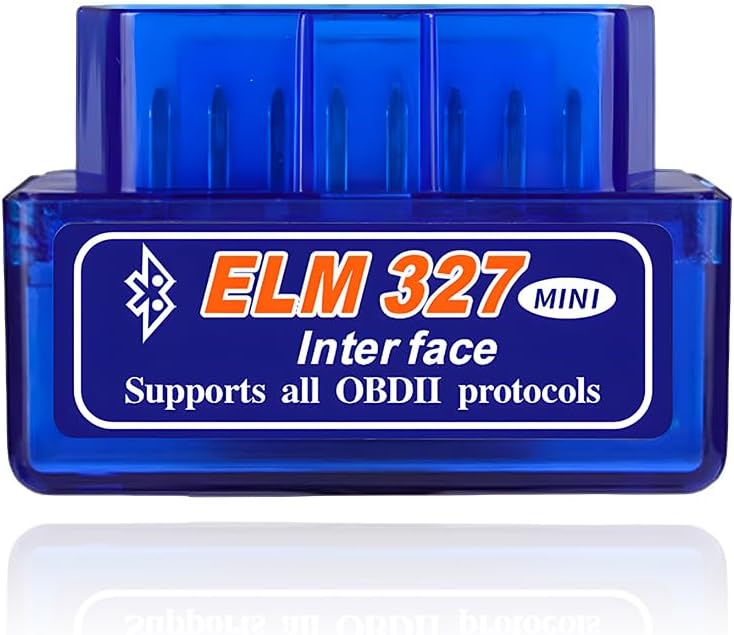
Generic ELM327 Bluetooth dongle | |
| Connection | Bluetooth LE | Bluetooth | Bluetooth LE | USB | USB | Bluetooth |
| iPhone | Yes | Yes | Yes | No | No | — |
| Android | Yes | Yes | Yes | — | — | Yes |
| Windows | — | Yes | — | Yes | Yes | — |
| FORScan | — | Yes | — | Yes | Yes | — |
| BMW coding | Yes | Yes | — | — | — | — |
| Check it out | Check it out | Check it out | Check it out | Check it out | Check it out |
The safest move is to stop shopping by version number at all. Branded adapters from Veepeak, Vgate and OBDLink run their own firmware, name the apps they support and answer support email. That is worth more than any figure on a sticker.
If you still want the cheapest route, a few habits cut the risk. Many complaints about v1.5 adapters trace back to a blob board that only claimed the label.
A clone that works on day one tends to keep working, since there is little inside to wear out. The failures owners describe are mostly connection problems from the start, or a cheap case cracking in a hot footwell.
What owners report after a year is worth weighing before you pick a clone. If the real choice is between phone connections rather than chips, classic Bluetooth vs BLE matters more than any version number.
No. ELM Electronics went from the v1.4 series to v2.0. Every adapter reporting v1.5 runs cloned firmware, though the better ones work well.
For a pre-2008 car or FORScan, a v1.5 board that names a PIC18F25K80. On a newer CAN car either label reads codes if the board is sound, though a branded adapter removes the gamble.
Many skip the J1850 circuitry and some commands. Pre-2008 Fords and GM vehicles that use J1850 then fail to connect at all.
Reports split sharply because the same label covers very different boards. Units built on a PIC18F25K80 draw far fewer connection complaints than blob boards.
Much less. On a CAN car from the late 2000s onwards, most working clones read codes and live data. It matters more for older protocols and for FORScan.
Generally no. Clone makers do not publish updates. Branded makers such as Vgate and OBDLink do offer firmware updates for their own adapters.