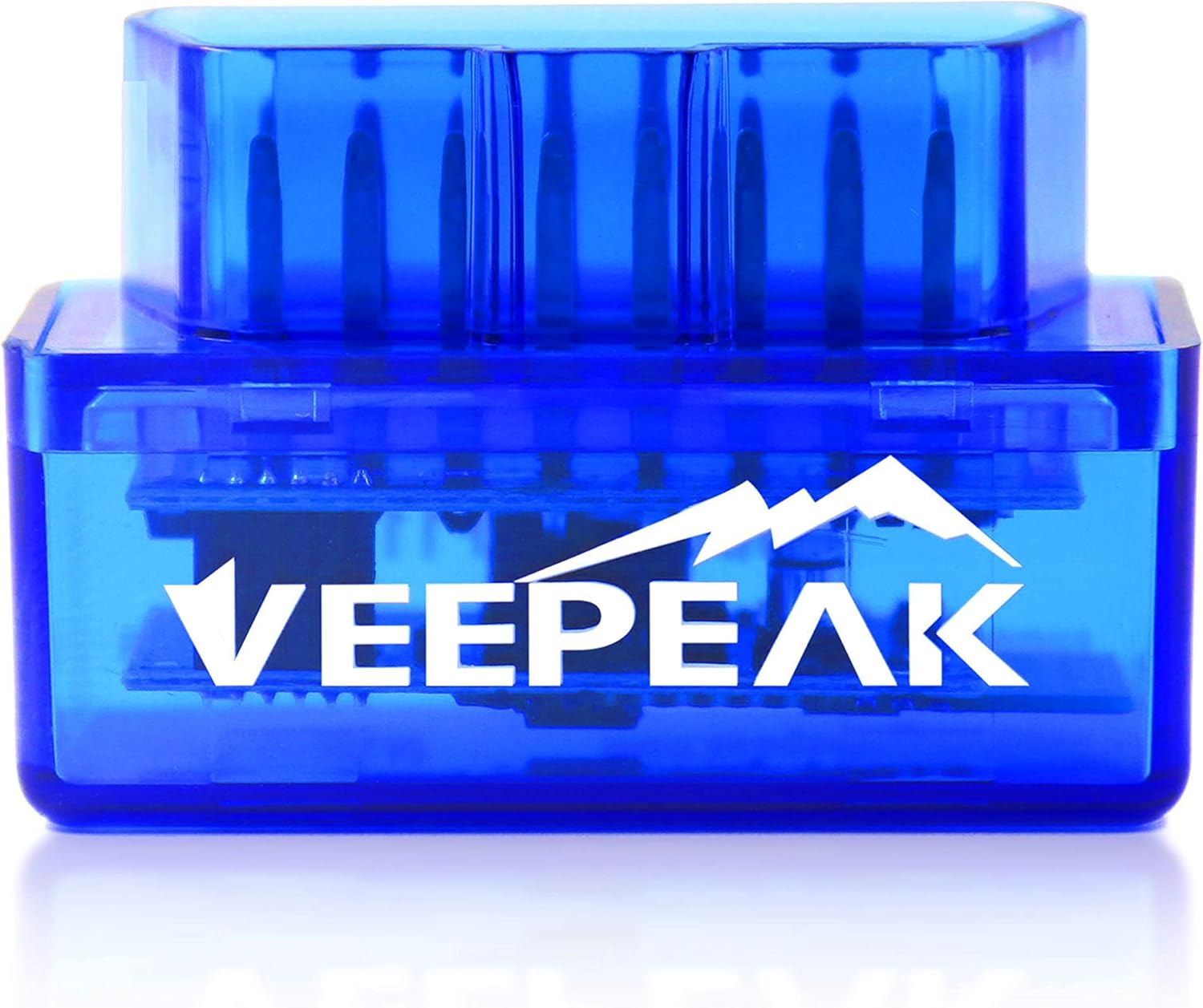
- Bluetooth LE connection
- Works with iPhone, Android
- BMW / BimmerCode ready
Why one Bluetooth ELM327 pairs with any phone and another only with Android, and what Bluetooth 4.0 or 5.0 on the box really tells you.
Last updated September 2026For an iPhone, get an ELM327 Bluetooth adapter that uses Bluetooth LE (BLE) and connect from inside the app. For Android, Classic Bluetooth works too and is often cheaper. A 4.0 or 5.0 on the box names the radio, not the mode, so look for BLE or iOS by name.
It is the most common Bluetooth complaint at the counter: the adapter lights up, Android sees it, the iPhone does not. Nothing is broken. The cause is the kind of Bluetooth inside.
Older and cheaper ELM327 Bluetooth adapters use Classic Bluetooth with the Serial Port Profile, a wireless stand-in for an old serial cable. Android and Windows open that kind of link freely. Apple only allows it for accessories that carry its Made for iPhone certification, and budget dongles do not.
Bluetooth Low Energy (BLE) arrived with Bluetooth 4.0 and works differently. Instead of a serial link, the adapter offers a small data service that any app can read, and iOS permits that without certification. So every iPhone-friendly adapter either uses BLE, uses Wi-Fi, or carries Apple certification.
If you already own a Classic dongle and just switched to an iPhone, there is no firmware fix. Keep it for an Android tablet, or hand it to a friend with an Android phone.
| Classic Bluetooth | Bluetooth LE (BLE) | Wi-Fi | |
|---|---|---|---|
| iPhone and iPad | No, unless Apple-certified | Yes, connect inside the app | Yes |
| Android | Yes | Yes, if the app supports BLE | Yes |
| Windows laptop | Yes, as a virtual COM port | Depends on the program | Yes |
| How you connect | Pair in phone settings, PIN 1234 or 0000 | Inside the app, not in settings | Join the adapter's own network |
| Phone keeps mobile data | Yes | Yes | Often not while connected |
| Words on the box | Bluetooth 3.0, Android only | BLE, Low Energy, iOS and Android | WiFi |
Apple-certified Classic adapters such as the OBDLink MX+ are the exception on iPhone. For Windows BLE support, check the program's own adapter list.
Version numbers look like a speed rating, so an ELM327 Bluetooth 5.0 OBD2 scanner seems better than a 4.0 one. On an OBD2 adapter the number mostly tells you which radio chip sits on the board.
BLE arrived with the 4.0 specification, so a 4.0, 5.0 or 5.2 radio can all support it. Whether the adapter uses BLE is a firmware choice, and some dual-mode boards still talk Classic to Android. The words that settle it are BLE, Low Energy or iOS.
Raw speed is rarely the bottleneck either, because the car's own network sets the pace:
| Car network | Speed | Typical cars |
|---|---|---|
| SAE J1850 VPW | 10.4 kbit/s | Older GM |
| ISO 9141-2 and KWP2000 | 10.4 kbit/s | Many older European and Asian cars |
| SAE J1850 PWM | 41.6 kbit/s | Older Ford |
| ISO 15765 CAN | 250 or 500 kbit/s | All US cars from 2008 |
For codes and a handful of gauges, the adapter's firmware and the app's polling matter more than the radio number. A newer radio helps with stability and power instead. Vgate's iCar Pro 2S pairs Bluetooth 5.2 with wake-up for EVs, and the OBDLink CX uses Bluetooth 5.1 for BimmerCode's heavy coding traffic.
Veepeak OBDCheck BLE |
OBDLink MX+ |
OBDLink CX |
Veepeak OBDCheck BLE+ |
Vgate iCar Pro BLE 4.0 |
Veepeak Mini (Android) | |
| Connection | Bluetooth LE | Bluetooth | Bluetooth LE | Bluetooth LE | Bluetooth LE | Bluetooth |
| iPhone | Yes | Yes | Yes | Yes | Yes | No |
| Android | Yes | Yes | Yes | Yes | Yes | Yes |
| Windows | — | Yes | — | — | — | — |
| FORScan | — | Yes | — | — | — | — |
| BMW coding | Yes | Yes | Yes | — | — | — |
| Check it out | Check it out | Check it out | Check it out | Check it out | Check it out |
The two phone families connect in opposite ways. Doing it the iPhone way on Android, or the Android way on an iPhone, causes most failed first scans.
Skip the settings menu. Open the app, set the connection type to Bluetooth LE, and let the app find the adapter. Veepeak tells owners not to pair its BLE adapters in the phone menu at all, and Vgate says the same for iOS. If an app offers both Bluetooth and Bluetooth LE, pick the one the adapter's manual names; the wrong choice looks exactly like a dead adapter.
Two more snags turn up often:
When pairing succeeds but the car stays silent, the problem sits on the car side of the adapter. The connection guide covers those ECU-side fixes, from a loose plug to a protocol set by hand.
The iCar Pro 2S uses Bluetooth 5.2, connects inside the app on iPhone and pairs with Android and Windows. It adds remote wake-up and deep filtering for electric and hybrid cars, and sleeps at about 3 mA.
Check it outBLE is not automatically better. For a Windows laptop or an Android-only household, a Classic adapter is often simpler and cheaper.
Windows turns a paired Classic adapter into a virtual COM port, and most PC diagnostic programs, from OBDwiz to plain terminal tools, expect exactly that. BLE support on Windows varies from program to program.
The catch is lock-in. Move to an iPhone later and a Classic dongle becomes a drawer item. The Veepeak OBDCheck BLE+ hedges that bet by offering BLE for both phone families plus a Classic mode for certain Android apps.
One practical tip for Classic users: name the paired adapter something obvious in your phone's Bluetooth list. When the car has two dongles over its life, you will know which one the app is trying to reach.
A Bluetooth ELM327 that works on day one can still drop out on the highway or drain the battery by Friday. The difference sits in the firmware and power design, not the radio.
Signs of a well-built OBD2 Bluetooth car diagnostic tool with ELM327 commands:
Generic ELM327 Bluetooth dongles skip most of this. Many read engine codes well enough, but a clone chip can skip commands that older protocols need. The chip version guide explains why a v2.1 sticker is no guarantee.
For most drivers, a BLE adapter from a known maker covers both phones and every standard job. The Wi-Fi guide covers the one case where Wi-Fi still competes, and the USB guide the case where a cable wins. For app choices, go to the app guide.
One habit helps any adapter last: pull it straight out rather than levering it sideways, and keep a bulky one clear of your knee. A bent pin in the car's port is a far bigger job than replacing a dongle.
Only if it uses Bluetooth LE or carries Apple certification, like the OBDLink MX+. Classic Bluetooth dongles marked Android only never appear on iOS.
Classic adapters usually use 1234 or 0000. BLE adapters need no PIN, because you connect from inside the app.
Not in a way you notice for codes and gauges, because the car's network is the slow part. The version matters more for stability and power use.
Yes. A Classic adapter appears as a COM port that FORScan, OBDwiz and similar programs can open. For module programming, a USB cable is still the safer link.
The Bluetooth link and the car link are separate. Check that the ignition is on, the adapter is fully seated, and the app's protocol is set to automatic.